
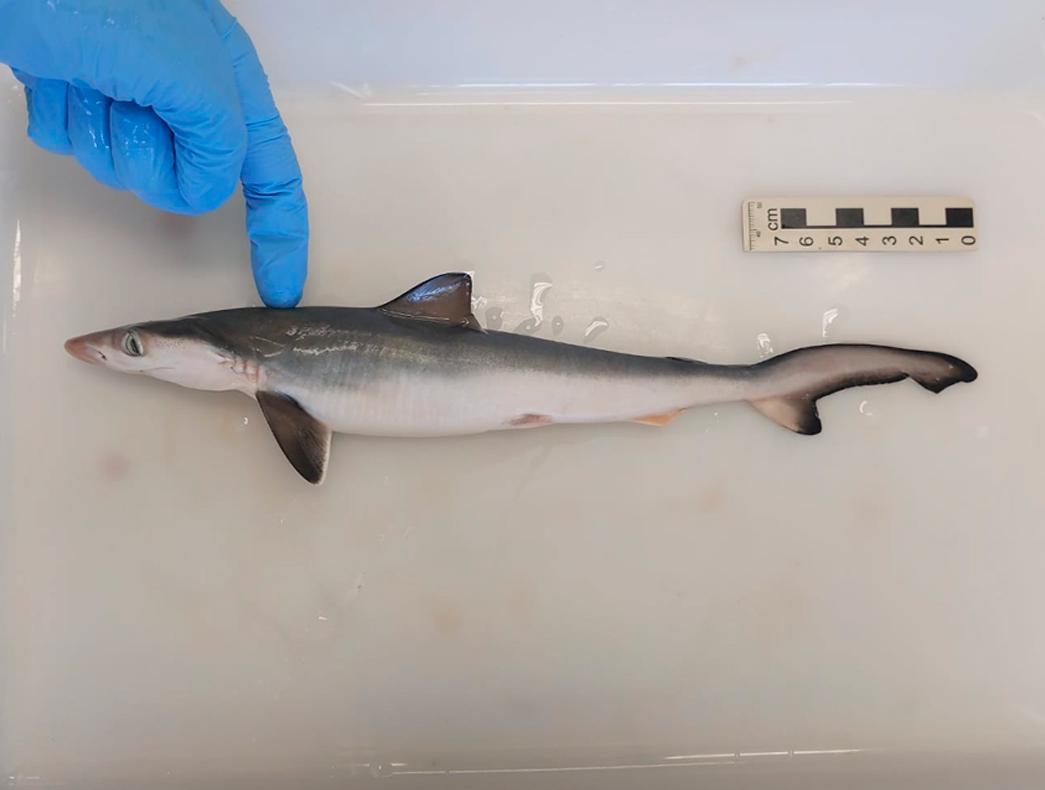
Scientists in Brazil, originally analysing environmental health in marine territory, including contamination of pesticides and other harmful substances recently found 13 sharks (Rhizoprionodon lalandii) at the coast of Rio de Janeiro that were contaminated with cocaine (Instituto Oswaldo Cruz, 2024). Former studies have already observed cocaine in marine environment and mussels (Instituto Oswaldo Cruz, 2024). In 12 of the sharks benzoylecgonine, a metabolite of cocaine, was found in their muscle and liver (Instituto Oswaldo Cruz, 2024) “highlighting an escalation in marine drug pollution” (Hauser-Davis, R. A., et al., 2024, p.1). This not only is a reflection of the illegal drug abuse in Brazil, but indicates alarmingly insufficient sewage management (Instituto Oswaldo Cruz, 2024).
Impacts on marine life
It is assumed that sharks get contaminated directly by living in this territory as these are non-migratory and vulnerable or by consuming other contaminated animals (Instituto Oswaldo Cruz, 2024). Yet consequences for marine organisms are not known entirely, but potentially the sharks reproduction, impairing growth, biochemical functions and health may be affected leading to physiological stress and deviant behaviour (Hauser-Davis, R. A., et al., 2024). Widespread consequences may follow, e.g. fewer fish stocks due to multiple anthropogenic stress factors for the oceans (Hauser-Davis, R. A., et al., 2024).
Impacts on humans
Additionally this raises concerns for human health as fish and also sharks are sold and consumed (Instituto Oswaldo Cruz, 2024). Based on scientific experience, chemical contamination of seafood leads to food insecurity for low-income, vulnerable, coastal and indigenous people that rely on fish (Hauser-Davis, R. A., et al., 2024).
As these findings are unprecedented further research regarding short- and long-term impacts on ecosystem and human health are indispensable.
References
Hauser-Davis, R. A., et al. (2024) Cocaine and other illicit drugs in the marine environment: Potential effects and future directions, Marine Pollution Bulletin, 208, p. 1-2. https://doi.org/10.1016/j.marpolbul.2024.117064.
Instituto Oswaldo Cruz (2024) Unprecedented: research detects cocaine contamination in sharks [Online]. Available from: https://www.ioc.fiocruz.br/en/noticias/inedito-pesquisa-da-fiocruz-detecta-contaminacao-por-cocaina-em-tubaroes
 Earth‘s Legacy Blog
Leave a comment