
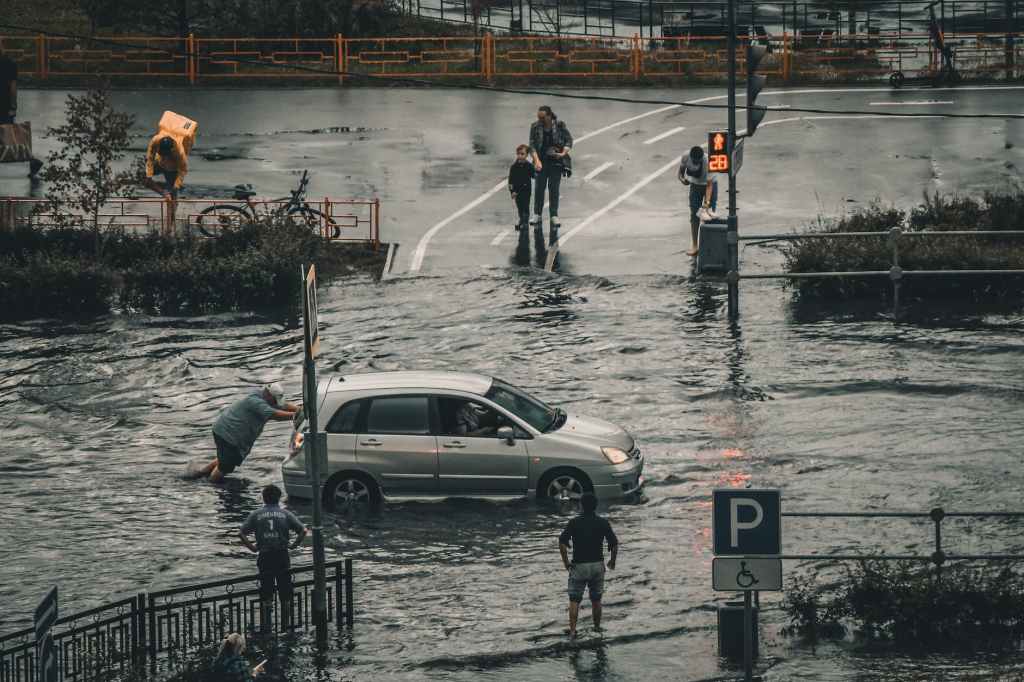
For this activity I interviewed a 24-year old Geographer who lives in the north of Germany near the lake Elbe and the North Sea. North Germany is very likely to shrink due to increasing sea levels.
The Interviewee had specifically one extreme weather event in mind. In 2021 the Ahrtal in west Germany faced an extraordinary flood catastrophe where many people lost their homes or even died. Also in 2023 a storm surge at the Baltic Sea of Germany caused a damage of several million euros. On top of that there are droughts in summer which lead to crop failure. All these events seem to increase, the interviewee notices. He himself was not affected by these events.
In general he states that people who live on islands and far away from mainland, in coastal regions and/or below zero are most affected by changes in weather. They are the first that are confronted with floods, heavy rainfall and storms. In particular buildings and infrastructure near the ocean or sea are more at risk to get damaged. Bridges and pylons may be affected and no longer usable after extreme weather events. But also buildings in dry areas near forests can be affected by wildfires. Moreover shallow or eroded areas are highly exposed to hurricanes, storms and floods.
Besides he adds that poor people, as well as small and poor countries are also extremely affected, with the explanation that those are not capable of taking precautions or react properly to extreme weather events. In his opinion richer and more stable countries should support poorer and affected countries by donating money to help restore damages after an extreme event or to prevent further damages by building dams for example.
As a result and to be better prepared in the future he advises to listen to experts and have trust in scientists which should be followed by governmental actions.
 Earth‘s Legacy Blog
Leave a comment